




I want you to picture two scenes.
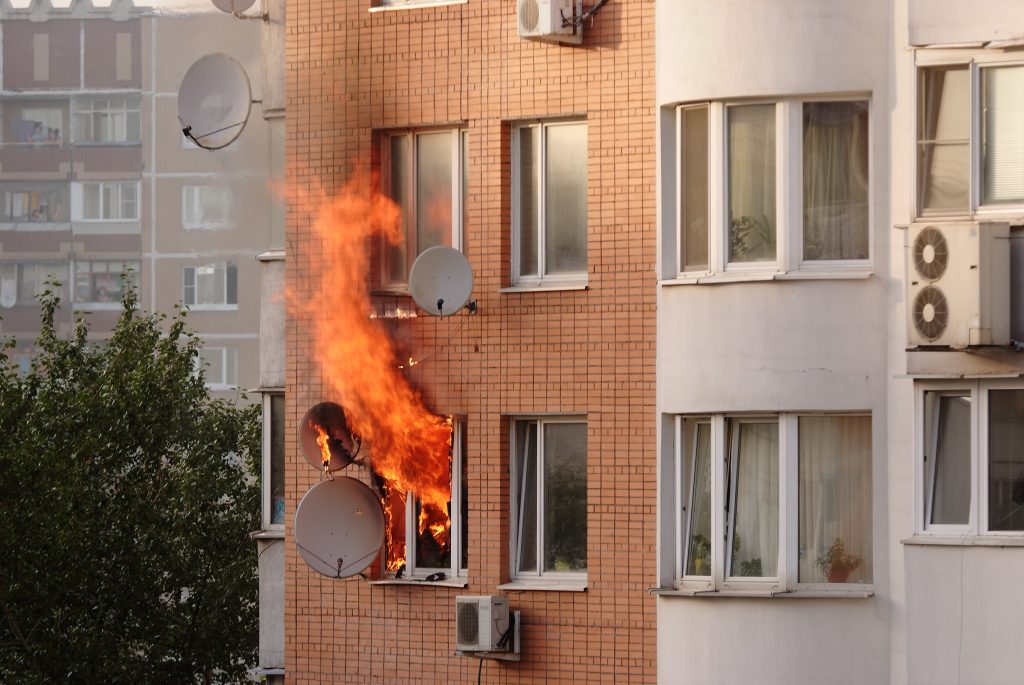
Scene one: a burning building. Sirens. Smoke pouring from a third-floor window. A crew arrives, and within roughly ninety seconds — no icebreaker, no “let’s just go round the room and check in with how everyone’s feeling about the fire” — they have assessed the structure, assigned roles, and are running a hose up the stairs.
Scene two: a mid-sized software company. A server has gone down, customers are furious, revenue is bleeding by the minute, and the response is… a meeting invite. For Thursday.
That, in a nutshell, is the gap I want to talk about.
The Cult of the Calendar
Modern project management, as I have moaned about at tedious length before, has become a religion of scheduling. Everything must go through the calendar. The calendar is Moses; the sprint board is the Ark of the Covenant; and heaven help the poor soul who tries to fix an actual problem outside of the properly ordained ceremony.
 Emergency services do not work this way, and it is instructive to ask why.
Because when the stakes are real — genuinely, unambiguously real, as in someone might die — nobody has ever suggested solving the problem by scheduling a retrospective for next Tuesday. They triage. They act. And they sort out the paperwork afterwards, when the building has stopped being on fire.
Three Things The Fire Brigade Does That Your PMO Doesn’t
- They know who’s in charge before the crisis starts, not during it. Incident command isn’t improvised on the fly; it’s rehearsed, drilled, and understood by everyone on the truck before they’ve had their morning coffee. Compare this to the average corporate crisis, where the first twenty minutes are spent working out whose crisis it technically is.
- They debrief honestly, without the theatre. A “hot debrief” after a serious incident is blunt, fast, and entirely uninterested in anyone’s feelings about being blunt and fast. Nobody is fired for saying “we were too slow getting the ladder up.” Contrast this with the corporate retrospective, a genre of meeting explicitly designed to ensure that nothing anyone says can ever be traced back to an actual consequence.
- They train for the bad day, not the good one. Paramedics don’t spend their downtime perfecting the paperwork for a routine callout. They drill for the multi-vehicle pileup, the mass-casualty scenario, the thing that will almost certainly never happen — because when it does happen, “almost never” isn’t good enough. Most project plans, meanwhile, are built entirely around the assumption that nothing will ever go wrong, and then collapse into total chaos the moment something does.
Now, I can already hear the discourse-guardians reaching for their smelling salts. You can’t compare a Jira board to a house fire. How dare you, this is trivialising the work of our brave frontline heroes.
Calm down. Nobody’s trivialising anything. I’m making the rather more modest point that a profession built entirely around dealing with real emergencies has, over decades of genuinely life-or-death practice, worked out some things about clarity, speed, and honest feedback that the average corporate project team — bogged down in status reports nobody reads and stakeholder maps nobody follows — could stand to borrow.
Emergency services don’t have “stakeholders.” They have people who are about to be dead or not dead, and a very short window in which to influence the outcome.
That kind of clarity is bracing. It cuts through an enormous amount of nonsense.
So What Would It Actually Look Like?
A few borrowed habits from the Emergency Services industry wouldn’t hurt:
- Decide who’s in charge of a crisis before the crisis, not during the argument about it.
- Debrief like grown-ups — quickly, honestly, and without anyone getting quietly punished for candor.
- Rehearse for the disaster scenario occasionally, instead of only ever planning for the version of the project where absolutely nothing goes wrong.
None of this is complicated. None of it requires a new platform, a new methodology, or a rebrand involving the word “agile” bolted onto something that has nothing to do with agility.
It just requires admitting, occasionally, that the people who run into burning buildings for a living might understand a thing or two about getting things done under pressure — rather more, in fact, than the people who spend their working lives building slide decks about it.
Related posts:
 What Project Managers Can Learn From the Space Industry
 Military Precision: What Project Managers Can Learn from the Battlefield
 Elevate Your Game: What Every Amateur Can Learn from Project Management Gurus
 Project Management in 2040: A Journey Into the Future
 Social Media as a Project Management Tool
 Lights, Camera, Action: What Project Managers Can Learn from Movie Production

Leave a Reply